Artist:Aven Chen
Artist Showcase Award: International Arts Competition Manhattan 1999
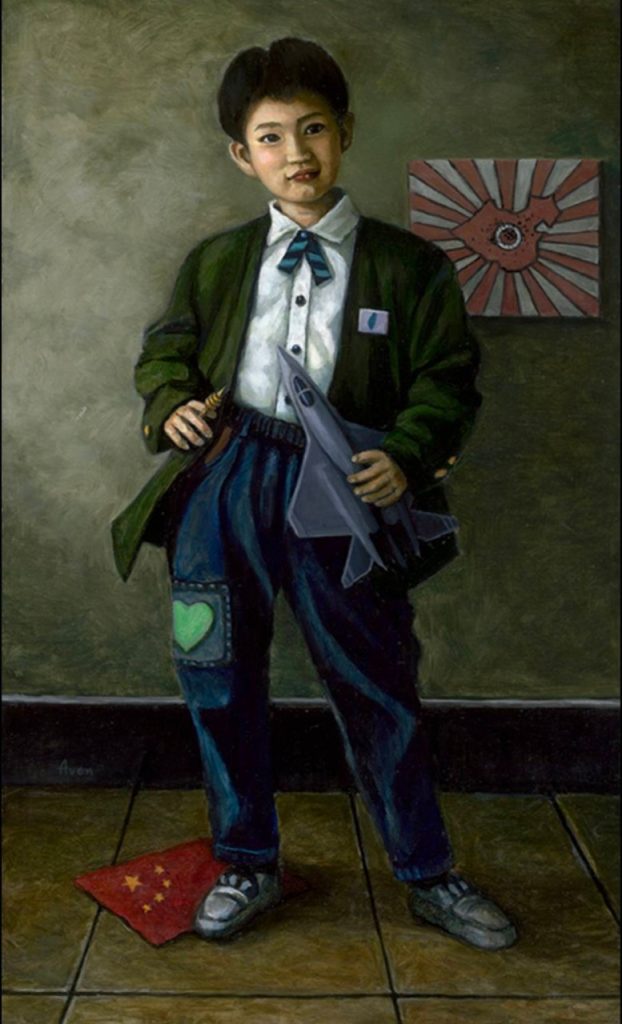
Oil Painting Size: 60cm by 100cm
About this painting
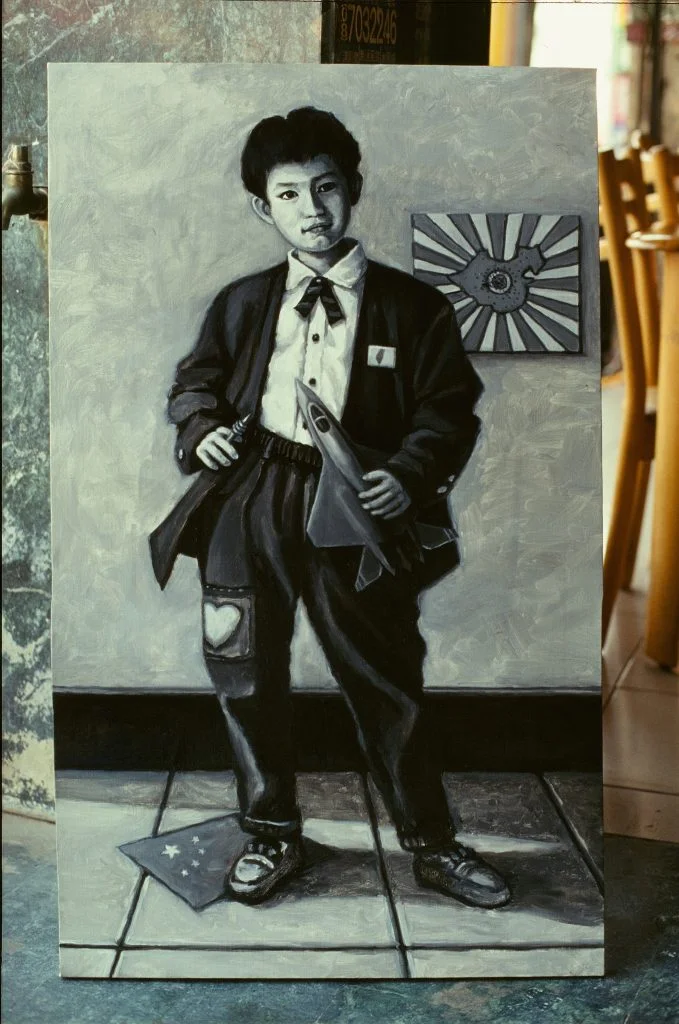
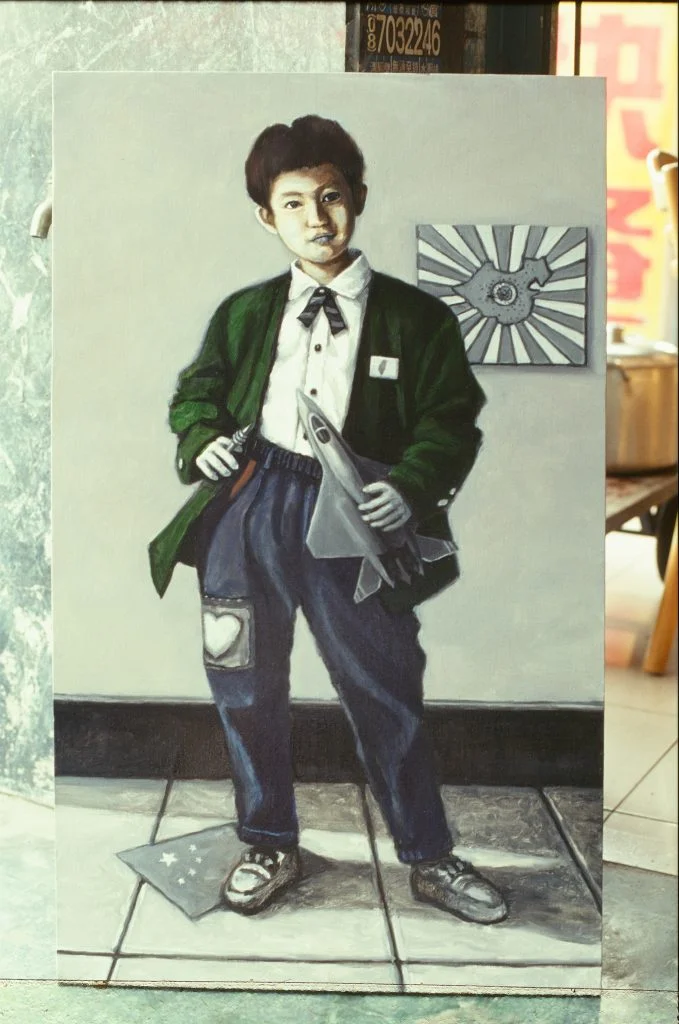
Although this oil painting was created at the end of the 20th century, the painter used 17th-century Dutch techniques instead.
It is because the Netherlands was the first foreign civilization the Taiwanese encountered.
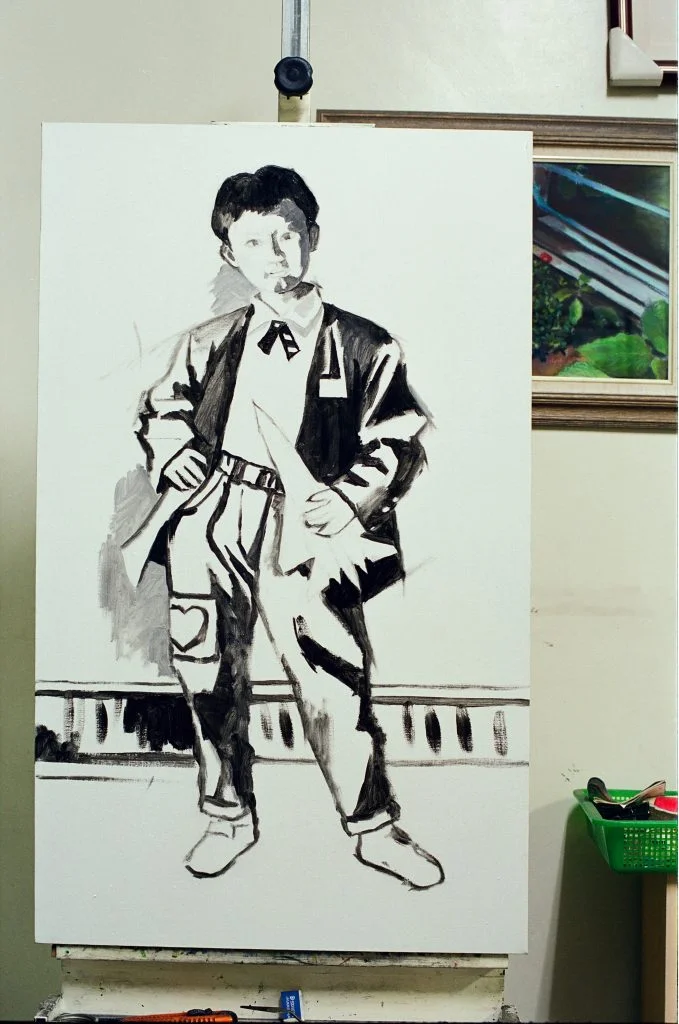
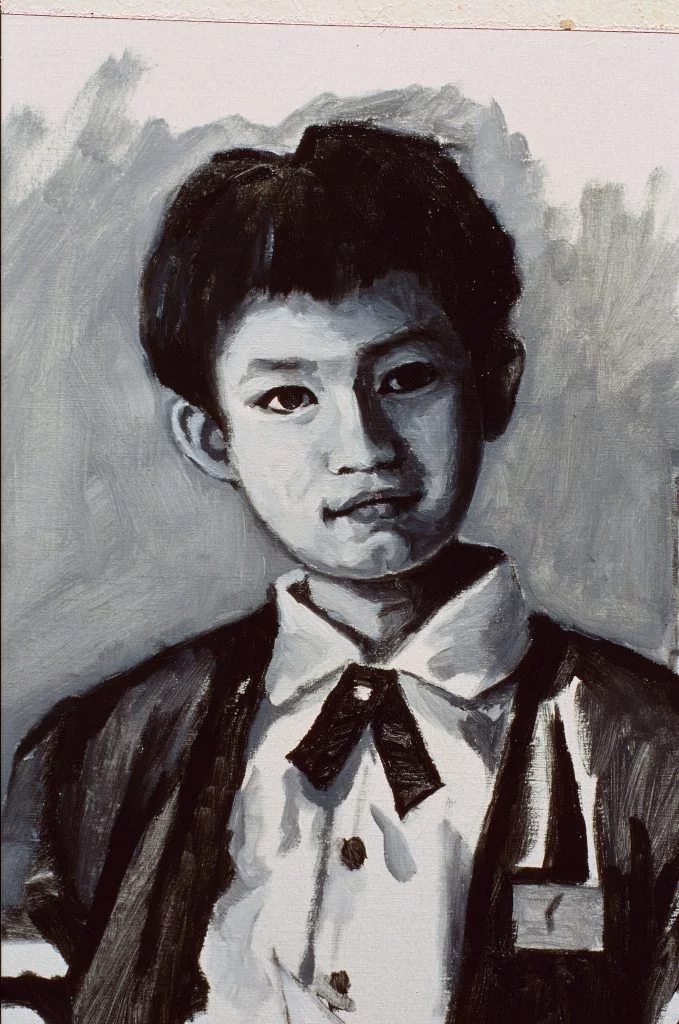
At that time, the Dutch painters mixed ivory black and lead white to acquire a black-and-white surface first, when the surface dried, they then applied transparent colors in order.
Said technique makes the painting feel transparent and full of antiquity, you can also see such transparency in the boy’s trousers clearly.
In this painting, the bullseye of the boy’s target is a map of China, which is derived from the flag of the Japanese Navy. Yes, to the Chinese, the Japanese Navy flag is a symbol of invasion. However, the painter changed the sun specifically into a map of China to tell everyone that Japan has changed, but China has become an aggressive country in the new age.
This painting was awarded for ‘Artisit Showcase Award 1999 ‘ of the International Annual Competition of Manhattan Arts to Aven Chen, an achievement that has made him famous in the international art world.
本作について
本作の油絵は20世紀末に制作されたものですが、画家はあえて17世紀オランダの技法を用いています。
というのも、台湾人が最初に接触した外国文明がオランダだったからです。
当時のオランダ画家たちは、象牙黒と鉛白を混ぜてまずモノクロの下地を作り、その下地が乾いた後に透明な色層を順番に重ねていきました。
この技法によって、絵画に透明感と古雅な雰囲気が生まれます。少年のズボンに見える透き通るような表現も、この技法によるものです。
本作で少年の標的の中心には中国の地図が描かれていますが、これは日本海軍の旗をモチーフにしています。
確かに中国にとって日本海軍旗は侵略の象徴ですが、画家はあえて“太陽”を“中国の地図”に置き換え、**「変わったのは日本であり、現在の時代に侵略的になったのは中国である」**というメッセージを込めています。
本作は、マンハッタン・アーツ・インターナショナル主催の「1999年アーティスト・ショーケース賞」を陳Avenに授与し、彼はこれによって国際美術界で名声を得ました。
Aven Chen
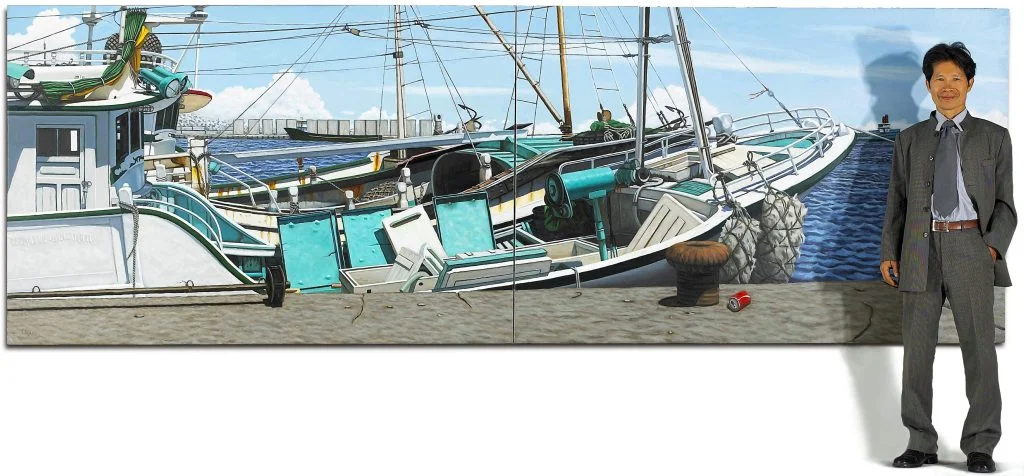
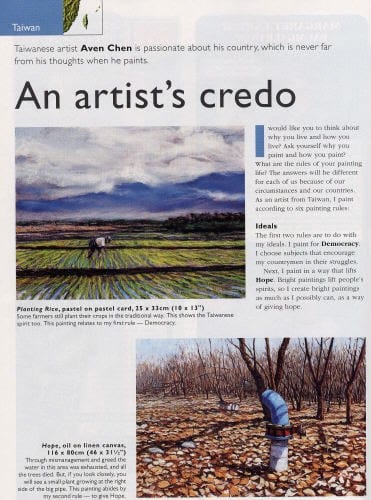
Aven is a Taiwanese painter who specializes in oil paintings of figures and landscapes. His painting techniques combine classical and modern painting schools. Aven has been awarded the International Arts Competition Manhattan 1999, an achievement that has made him famous in the international art world.
Aven は人物画および風景画を専門とする台湾の画家であり、古典絵画と現代絵画の双方の技法を融合させた独自の油彩技法を用いています。
彼は「1999年マンハッタン国際芸術コンクール」で受賞し、その功績によって国際美術界で広く名を知られる存在となりました。
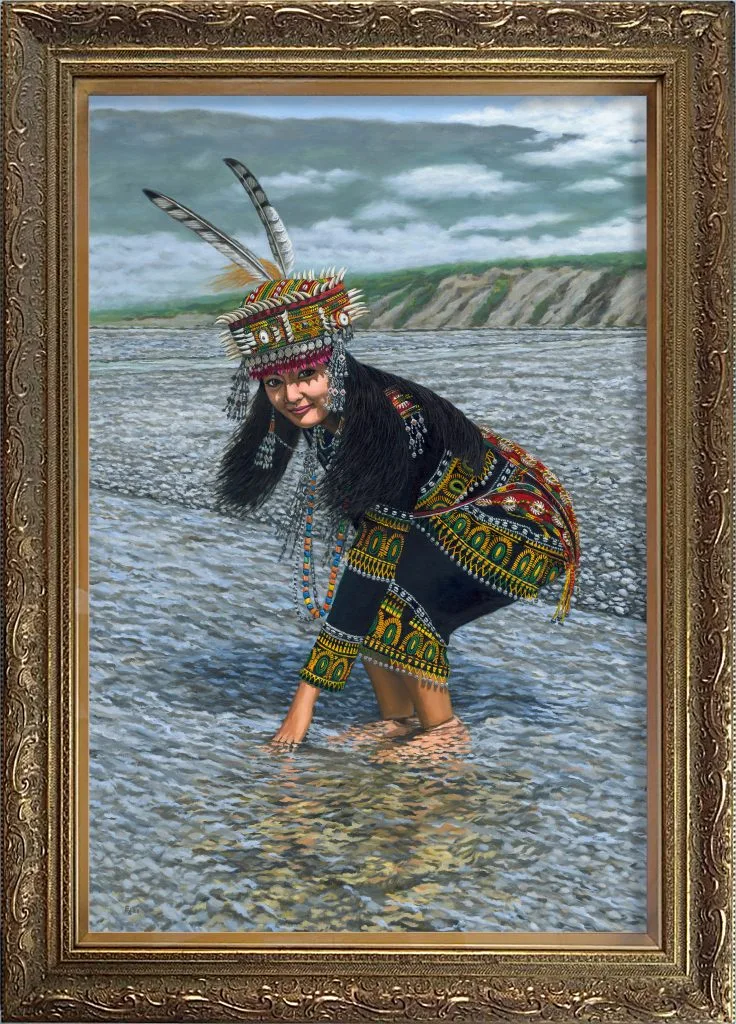
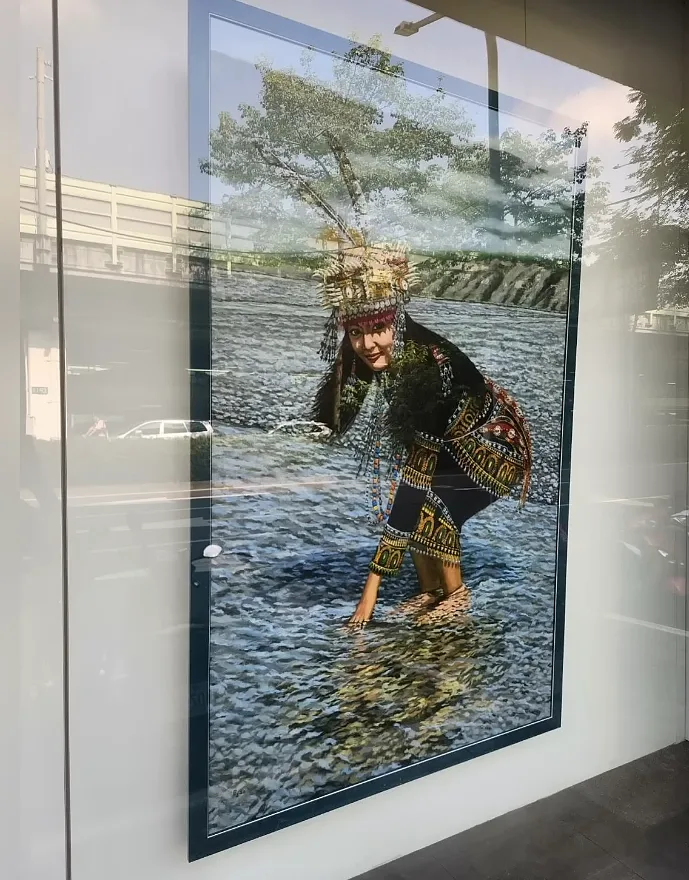
Oil Painting :Paiwan Princess in the wild
Size: 118cm X 177cm
Oil Painting ‘1500s Spainish met Taiwan Aboriginal’
See main page of this art work.
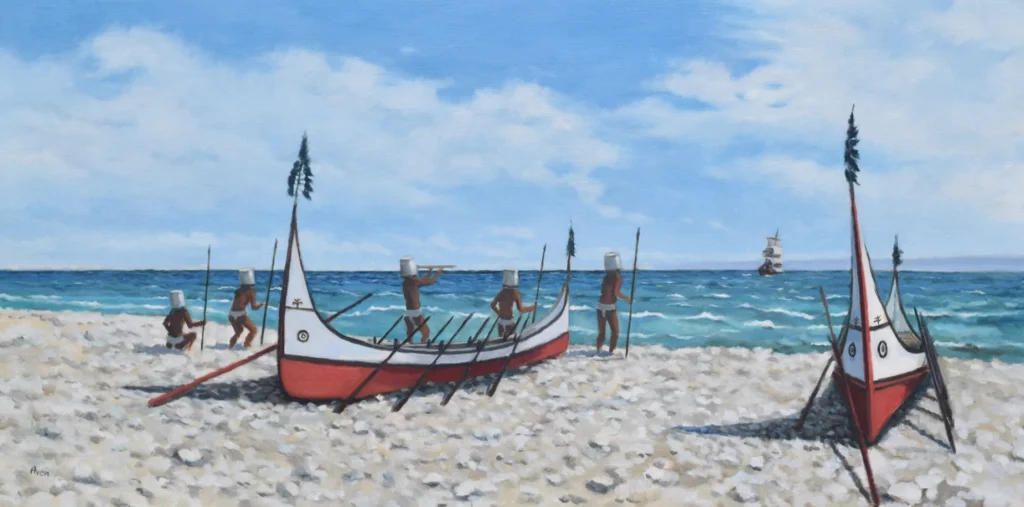
Size: 120 cm X 60 cm
Artist: Aven
About the Painting
By the mid-16th century, Spain had colonized the Philippines. At that time, the shortest route from the Philippines to Japan was through the waters east of Taiwan and directly to Japan. Therefore, the Spanish fleet must have encountered Taiwanese aborigines. This oil painting reproduces the scene of the Spanish fleet and the Tawu people of Orchid Island looking at each other from a distance. Aboriginal warriors in thongs wear cylindrical helmets on their heads. Among them, the leader is holding a telescope and looking into the distance. The telescope is a trophy obtained by the aborigines in the battle. Far away on the horizon is Formosa, Taiwan’s original name before the last century. *See also: Why did Europeans discover Taiwan earlier than the Chinese
16世紀、フィリピンはすでにスペインの植民地であり、フィリピンから日本へ向かう最短航路は、台湾諸島の東側海域を通って日本に直行するルートでした。したがって、スペイン艦隊は必ず台湾原住民と遭遇したはずです。 本作の油絵は、スペイン艦隊と蘭嶼のタオ族が遠距離で互いを見つめ合う情景を再現したものです。ふんどしを身に着けた原住民の戦士たちは、円柱形の兜をかぶっており、中でも望遠鏡で観察している人物が族長です。なお、その望遠鏡は原住民が戦いによって得た戦利品(trophy obtained in a battle)です。 水平線の彼方に描かれているのはフォルモサ島であり、フォルモサとは、20世紀以前に台湾を指す旧称で
How to purchase a reproduction or a oil painting?
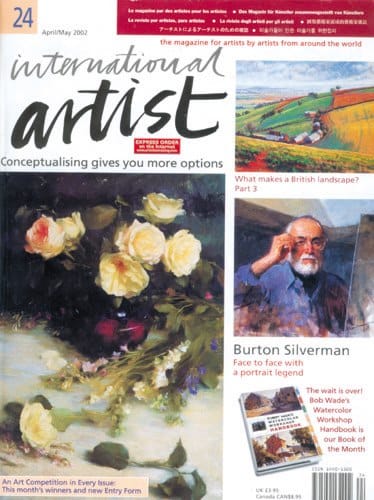
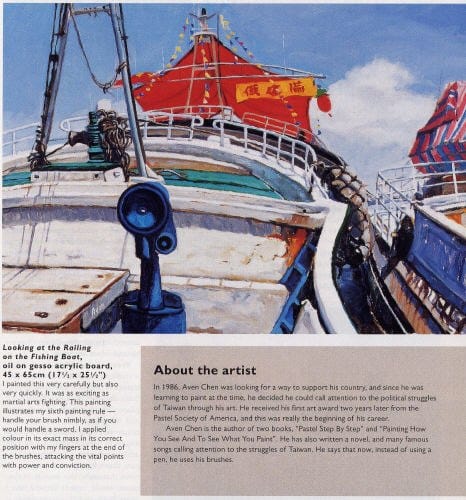
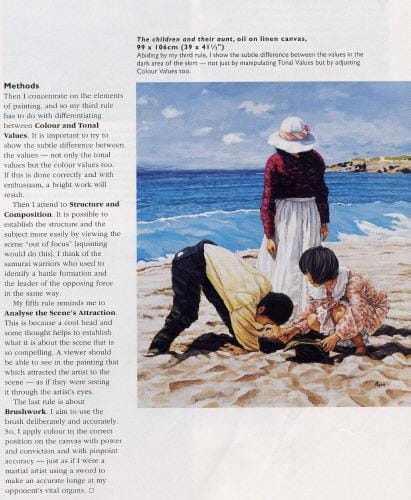
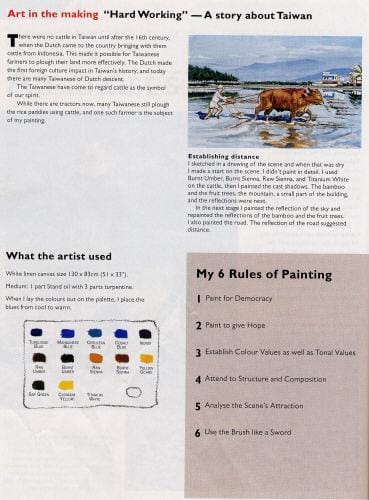
Art publications about Aven’s work:
Step-by-Step Illustration of Aven’s Work ‘A Smiling Taiwan Boy’ | Oil Painting
Back to home page of KuroshioArt Museum.